3d model to help drawing poses
I've been an animation director for the past couple of years and accept worked with many animators, helping them hone their skills to get faster and more efficient. Initially, I found that the animators were taking too long fiddling with their keys in the graph editor, trying to fix a fundamentally flawed animation. The best affair to practice was to starting time again with a new foundation for them to follow.
So nosotros idea it would be best to put these steps into an easy-to-follow list rather than a load of Maya tutorials. This has developed into the foundations of AnimDojo's approach to animating.
- How to rig a grapheme for posing in Maya
There are many things I can cover here, simply I want to share with you lot something practical and so you tin get a sense of how our approach is different. This is an exercise that's recommended to exist washed at least half an hour earlier animating, just like a warm-upwardly exercise. Doing so will help you to build muscle memory, enabling yous to break free from viewing the figurer or Maya equally an obstacle. Instead, y'all'll encompass information technology as role of your time and piece of work effortlessly. In time this will free you lot to focus on posing and animative without feeling "slow or stuck".
You lot'll have 5 minutes per pose, and you tin use the rig provided with this workshop and follow along in one of our pre-recorded live sessions. Even so, before you lot do that you need to follow a few simple steps to know how to do it correctly…
Download the resource for this tutorial.
01. Configuring the viewport in Maya
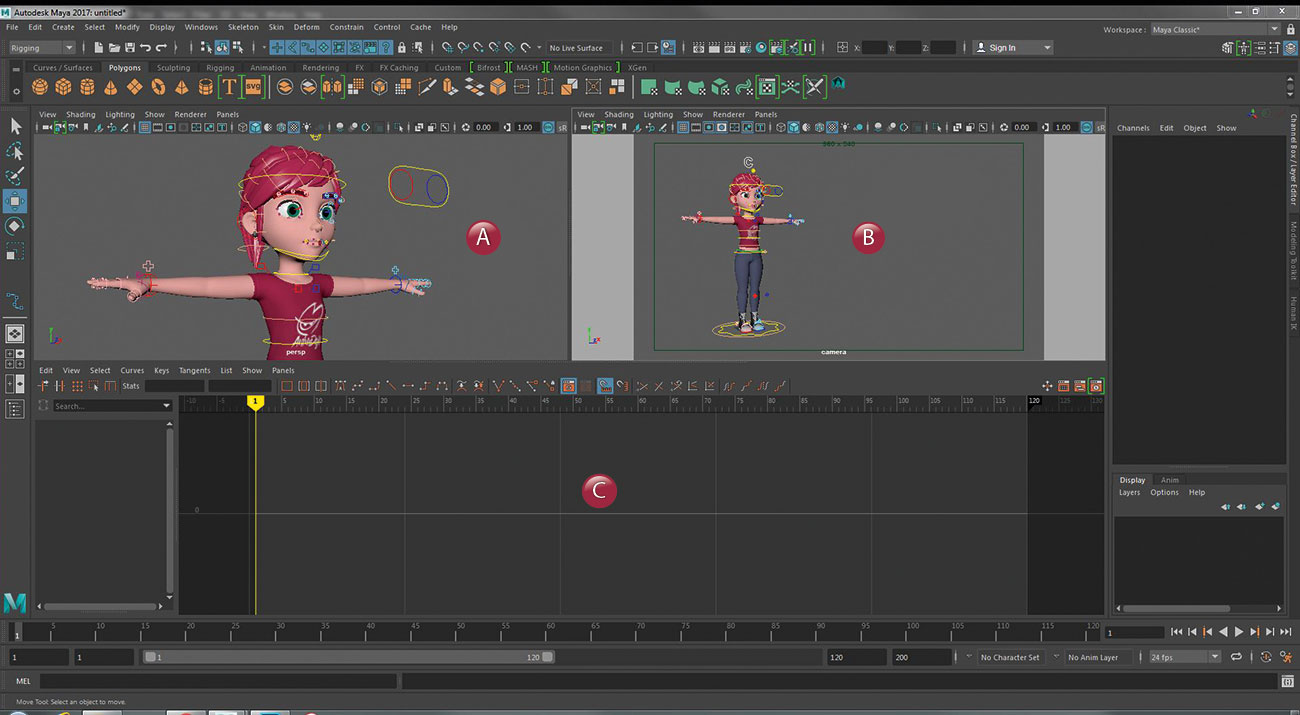
One of the things that helped me amend my speed and efficiency in Maya was when I used the 3-port view instead of having dual monitors. On the left would exist my perspective (A), on the right my camera view (B), and below is the graph editor (C). The reason for this is so I don't proceed turning my caput betwixt ii screens, constantly checking both for every step I make. I work xc per cent of the time direct in the camera view, and only use perspective if I can't get the pose to work because of awkward positioning of body parts to the camera.
02. Allow'southward middle mouse it!
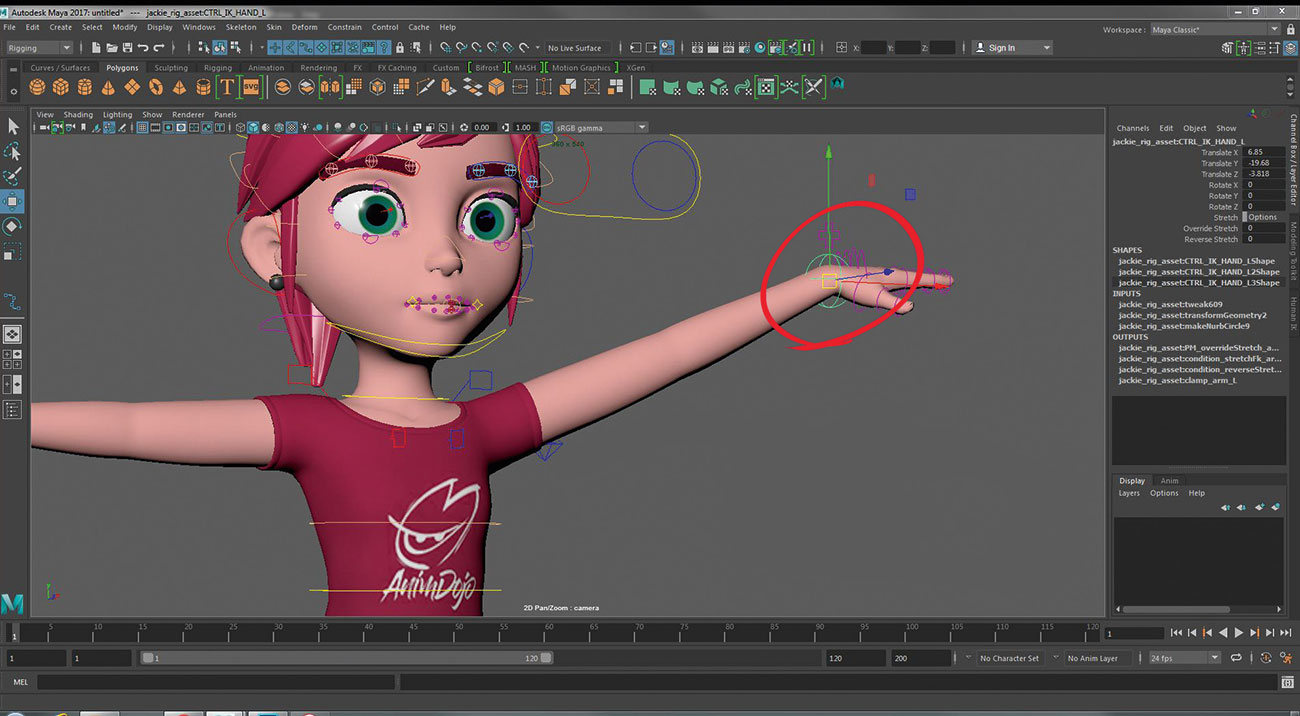
This is a term I use a lot with my animators. I've seen so many people control the rig by selecting the actual manipulators and moving them axis past axis. This is such a time waster! Grab the character's arm, then anywhere on the screen merely utilise your heart mouse button and drag it wherever you need information technology to be. This is much faster, and over time y'all'll see the benefits of this approach. Notation that this is simply possible with translation, not rotation.
03. Less is definitely more
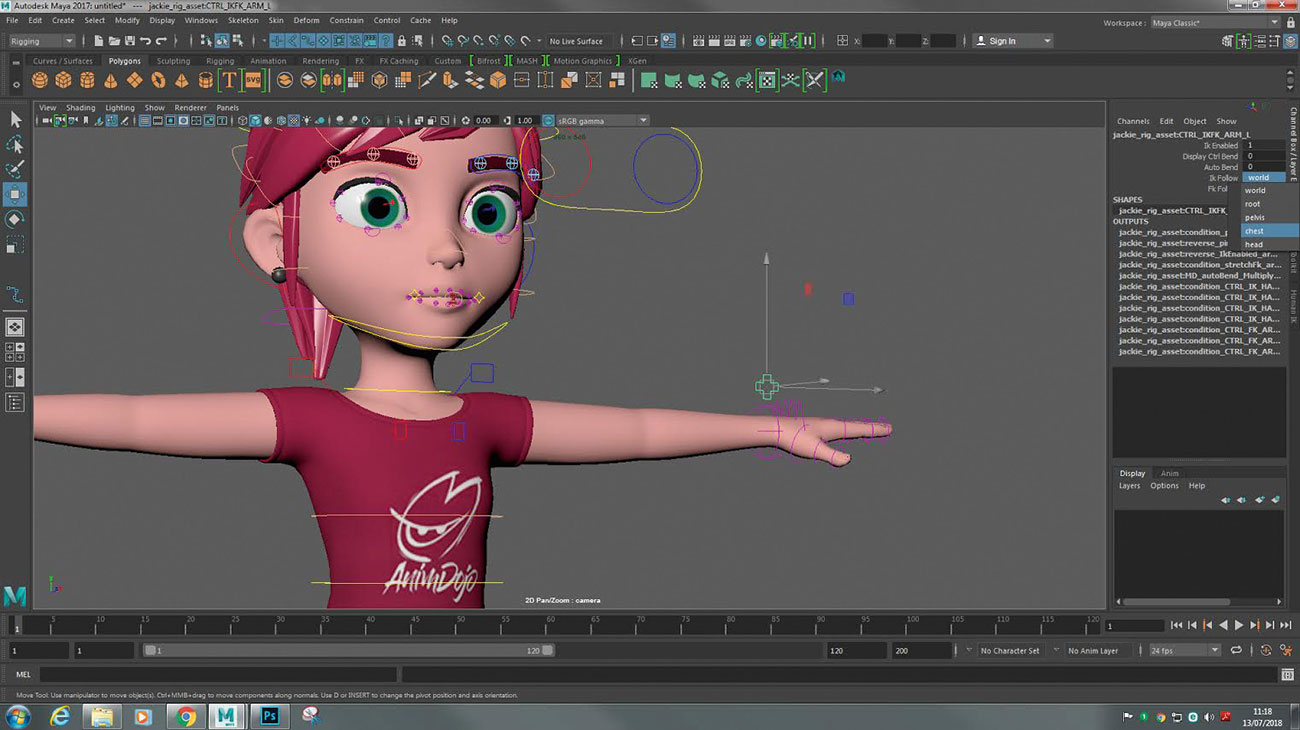
The idea that the more complex a rig is the amend it'll perform, is a pet peeve of mine. Keep things elementary. Set up your arms to IK mode and set their space to either hips or chest. That way, when you lot movement the hips the entire upper body moves along with it. You want to be able to move the character with as few controllers as possible.
04. Quickly assess your line of activeness
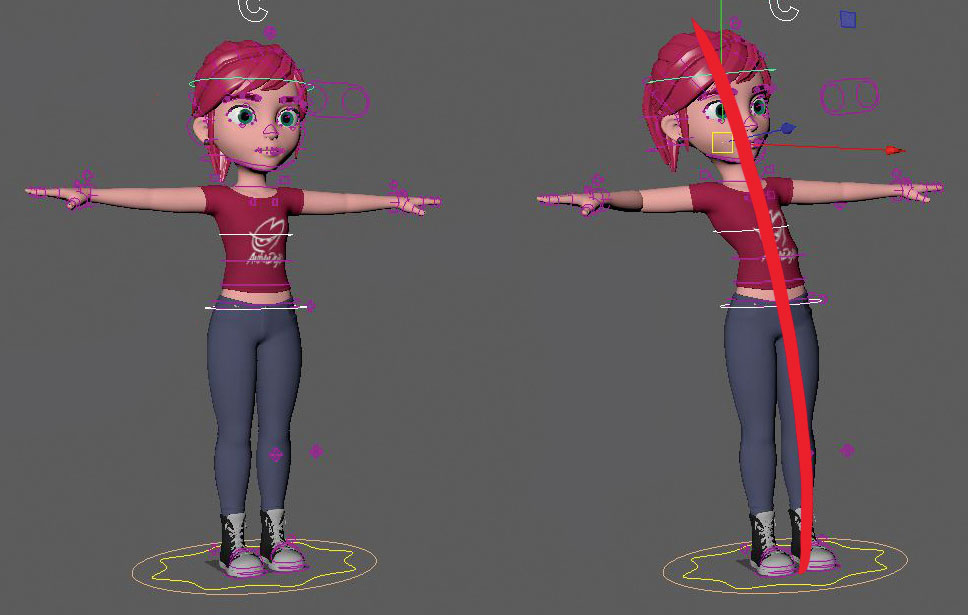
The corporeality of time wasted when posing a grapheme sometimes boils down to ane little thing animators forget about, and that's the line of action. Take hold of the hips, the chest and the caput if need be, and together motion them into position. This will give you a quick glance at what your line of action will wait similar, without spending a long time moving each body function – only to realise you haven't pushed the pose enough.
05. It's all in the hips
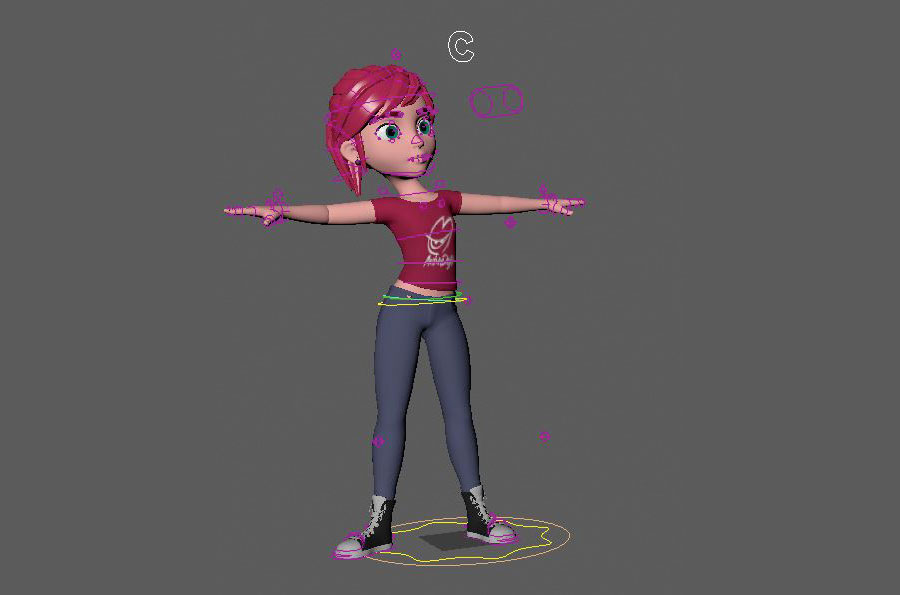
One time you've posed your line of action, yous'll notice that your graphic symbol looks a little wonky. But that'southward okay, because now it's time to fix the pose to piece of work with our line of action. Don't bother with the chest or head, and completely ignore the arms at this phase. Your focus should be on the hips. If you've fix up your rig to work from the hips upward like nosotros did in step two, then moving the hips moves the entire upper trunk. This is also a good time to pose the legs to work with the hips.
06. Become through the spine upwards
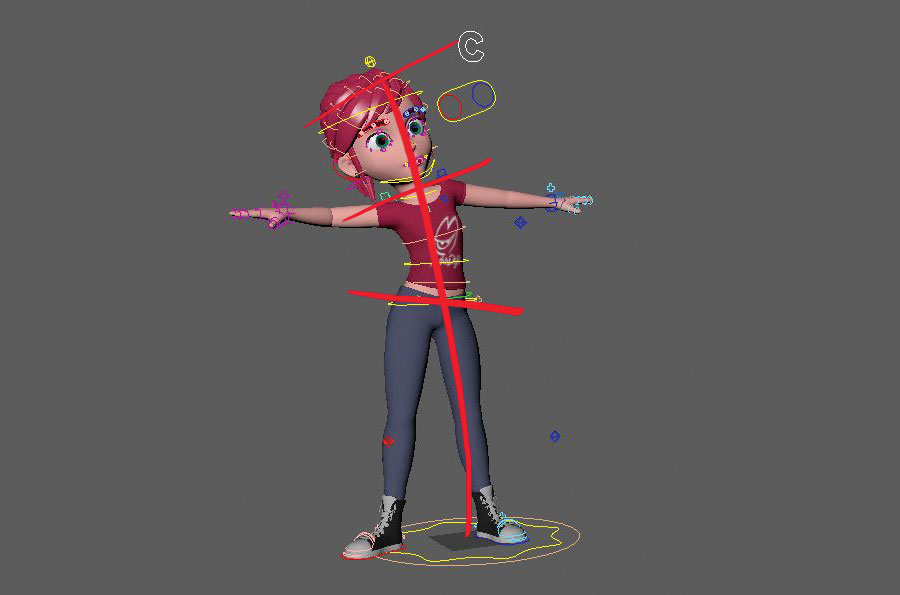
Now that our hips are in place, it's time to adjust the chest and caput to fit perfectly into our line of action. Don't forget to tilt the shoulders in such a way that information technology's in residuum with the hips. I always go on an eye out for twinning (when both sides of the body are mirrored) and this is a unproblematic way to fix that.
07. Work the face up early on on
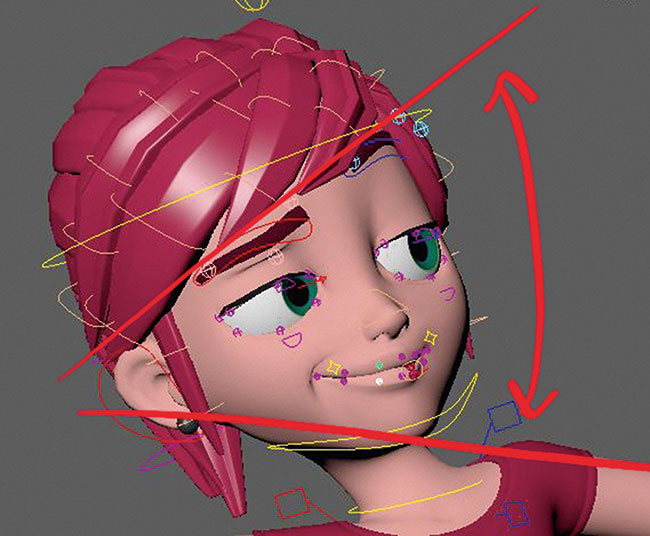
1 thing that I regularly notice with animators is they tend to get out the face until the very finish. This ordinarily results in the face feeling detached from the torso as it moves. A skillful way to become into the habit of always posing the face with the body is by following this workshop. Don't ignore things and say to yourself, "I'll get to that when I polish my blitheness." The face needs to be posed from the very first blocking stage.
08. The hands need attention, too
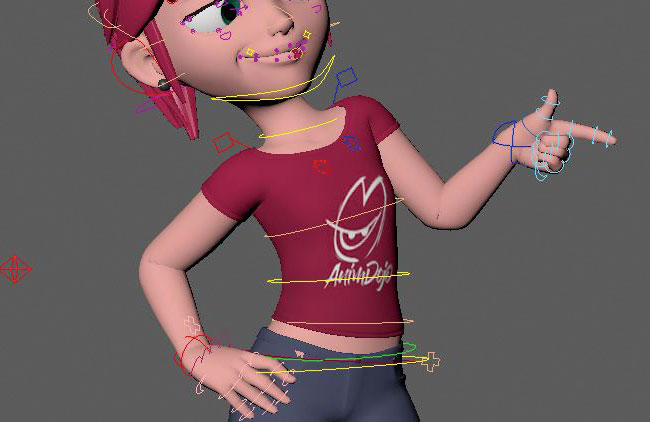
I often become asked how I pose my hands so quickly, and the answer is very uncomplicated. I select all the controllers at once, so when I rotate they all rotate together. It's taken me some time to become used to doing it, but once you work this mode you lot won't want to become back to your old ways of posing.
09. Soften the edges of the grapheme's limbs
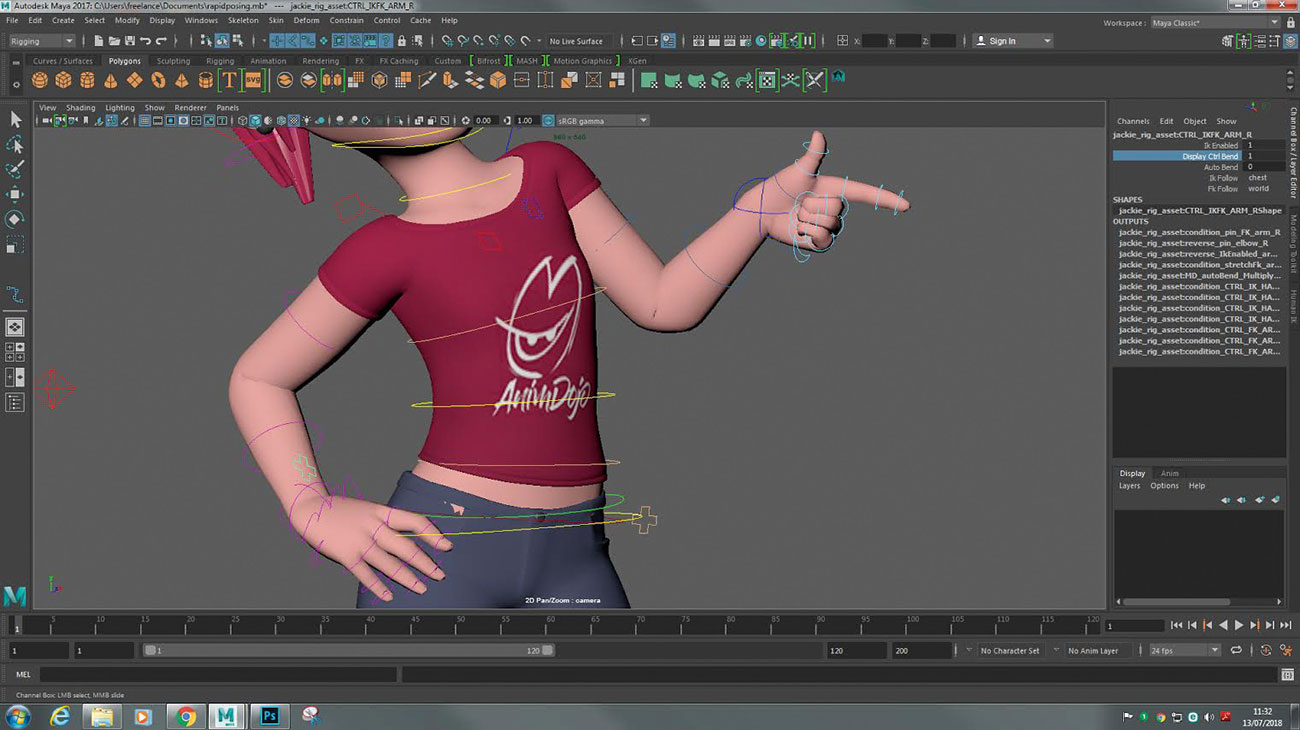
In general, for cartoon blitheness I ever prefer to soften the edges of elbows and knees. Information technology gives it a softer more appealing wait. Don't go overboard though, otherwise you'll stop up with a "rubber hose" fashion (unless that's the look you're going for). It's a balancing act and I always push my animators and students to piece of work this into their initial blocking.
10. Do you have more time?
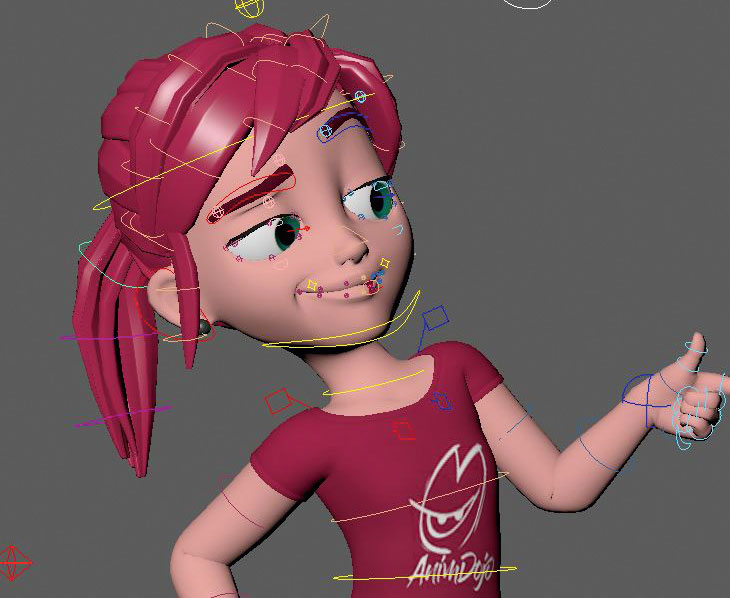
At present this stride relates specifically to our AnimDojo workshop. If you observe that you withal accept time to work on the pose before the v minutes are upward, be conscientious not to over-analyse and finish upward ruining the pose y'all came up with. In that location's a creative freedom that you lot generate from the get-go "gesture" pose you made, and you don't want to lose that. I'd recommend focusing on pushing the details. Piece of work more than on the limbs, the confront – even the graphic symbol's hair could add to the pose.
eleven. Become one manner or the other
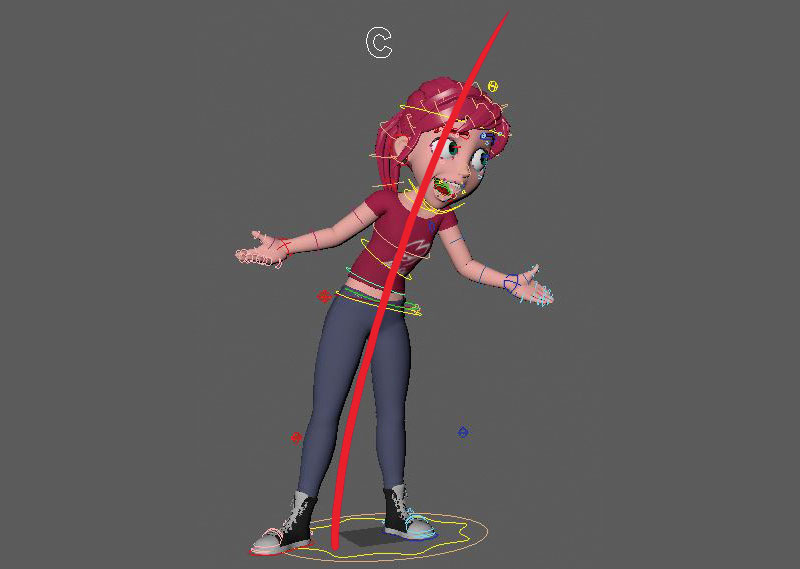
I always go asked about acting and how to decide what pose to put the grapheme in. The tricky part is how to practise this in just five minutes! The way I await at posing a character is by simply going one fashion or the other. For example, if I were to pose the character as "surprised" I can either draw my line of action going abroad, or towards the viewer. There are many other means of course, but I like to keep things unproblematic. If I'g posing a character moving as they talk, pose one would be one style and pose 2 would be in the contrary direction.
12. It's all well-nigh developing contrast
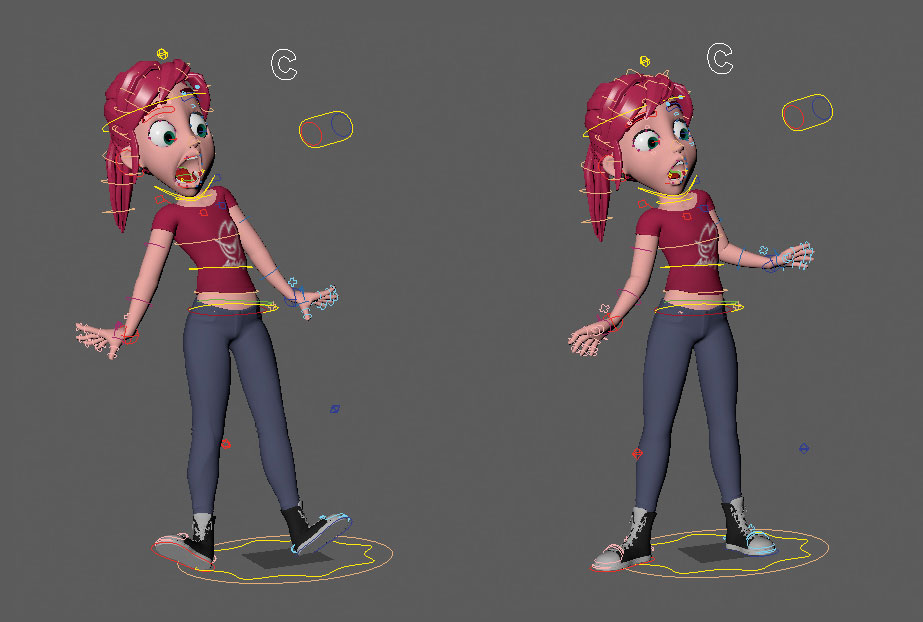
One of the problems I used to experience early on in my career was getting my animation to look cartoon-like. I've realised over the years that the reason I wasn't getting those results was mainly downwards to me not putting plenty contrast between my poses. Don't only get for fifty per cent of what the pose could be – button beyond and exaggerate it. Don't be agape to "break" the rig – in other words, pushing it beyond its limits. Every bit long as what'southward broken is hidden from the camera view, it doesn't matter.
thirteen. Compiling an acting library
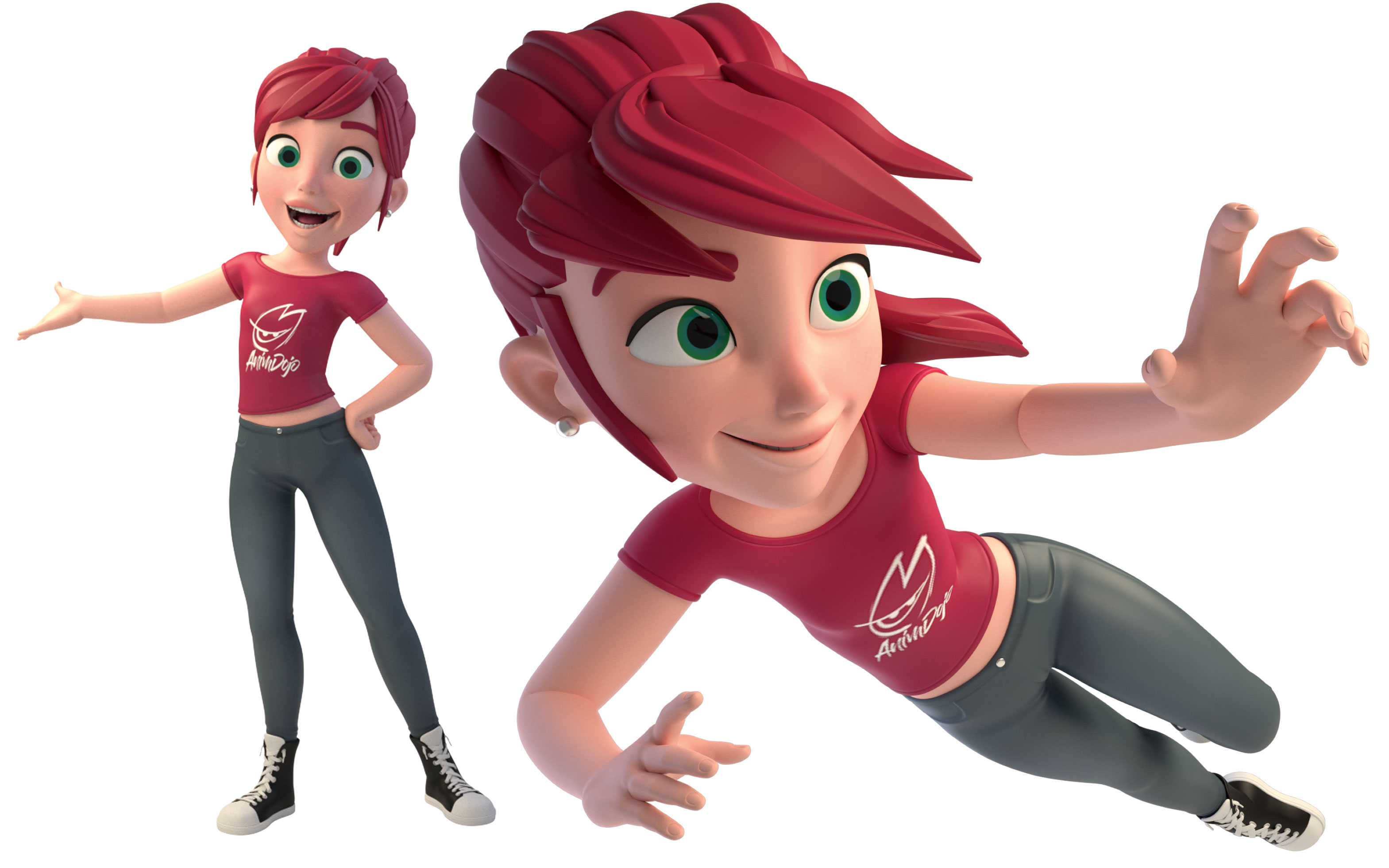
One of the best ways to learn how to pose is to build a library of acting choices in your head. I love going to the park but to observe and report people. I keep a mental note of what I run into and try to add it to my piece of work. I also try to human action and experience things out, to know which muscles to pull or where the weight is in my poses. This takes time, but in the long run yous'll be able to pull a pose out of your caput whenever you need it!
This article was originally published in issue 165 of ImagineFX , the world's best-selling magazine for digital artists. Subscribe to ImagineFX here .
Related articles:
- How to depict move: 16 top tips
- 17 skillful storyboard tips for Goggle box animation
- Pose a character in ZBrush: 4 top tips
Source: https://www.creativebloq.com/how-to/easy-posing-techniques-for-3d-models

แสดงความคิดเห็น for "3d model to help drawing poses"